Ankle-brachial index & duplex ultrasound
Quick, painless office tests that confirm the diagnosis and grade severity.
Keep walking. Keep your legs.
Peripheral artery disease (PAD) is narrowing of the arteries that supply the legs — most often from atherosclerosis. Early on it causes pain when walking; later it can threaten the limb. With modern catheter-based tools, structured exercise and aggressive medical therapy, we keep our patients walking — and out of the operating room.

No surprises — here's exactly what to expect, in time, anaesthesia and follow-up.
A focused, high-volume set of procedures — performed often and performed well, by the same senior team every time.
Quick, painless office tests that confirm the diagnosis and grade severity.
Detailed roadmap of the arteries, used to plan intervention when needed.
First-line treatment for claudication — often as effective as a stent, with no procedural risk.
Catheter-based opening of blocked leg arteries through a tiny groin or wrist access.
Advanced tools for calcified or recurrent lesions, used selectively for the best long-term result.
Multidisciplinary care with podiatry and wound services for patients with critical limb ischemia.
The equipment behind this specific service — chosen because precise tools support precise decisions.
Whole-leg arterial mapping without contrast or radiation.
Paclitaxel-coated balloons that lower restenosis without leaving a stent behind.
For heavily calcified femoral and popliteal lesions.
Sub-millimetre arterial roadmap for precise intervention planning.
Vascular exam, ABI, ultrasound and a clear conversation about your goals.
Most patients start with exercise, statins and antiplatelets. Intervention is reserved for those who truly need it.
Quarterly check-ins to track walking distance, wounds and risk factors — adjusting treatment as your life evolves.
Simple weekly app log to track pain-free distance and total walking minutes.
LDL target < 1.4 mmol/L; aspirin or clopidogrel adjusted to your bleeding risk.
Direct line to podiatry and wound nursing for any new foot lesion.
Tracks whether the artery is staying open and catches restenosis early.
"I could barely walk to the corner shop. After the angioplasty and the rehab programme, I'm doing my full morning loop again at 71."
If yours isn't here, ask our team — we love a good question.
For most patients with PAD, the answer is firmly no. Amputation risk rises only when the disease is critical and untreated — exactly what our program is built to prevent.
Yes. Supervised exercise programs can double walking distance and rival stenting for claudication, without procedural risk.
It raises stakes, especially for wound healing. We coordinate closely with your endocrinologist and podiatrist.
The same standards apply to every service we offer.
Every study is read and every procedure performed by a fellowship-trained cardiologist or vascular surgeon — never an outsourced reader.
ECG, echo and duplex ultrasound on-site, with results explained in plain language before you leave the clinic.
We default to wrist access, local anaesthesia and outpatient pathways — so most patients are home the same day.
One named cardiologist follows you from first visit through recovery. No revolving door, no repeated histories.
Open Mon–Fri 8:00–18:00, Sat 8:00–12:00. Same-day urgent slots reserved every morning.
Speak to a clinical team member before you book. No call centres — real clinicians.
Choose a time that fits your week. Confirmation and pre-visit guidance arrive immediately.
Book a visit, send us a question, or simply walk in. We'll take it from there — calmly, clearly, and at your pace.

ECG, echocardiography, stress testing and 24-hour Holter monitoring for early, accurate insight.
Learn more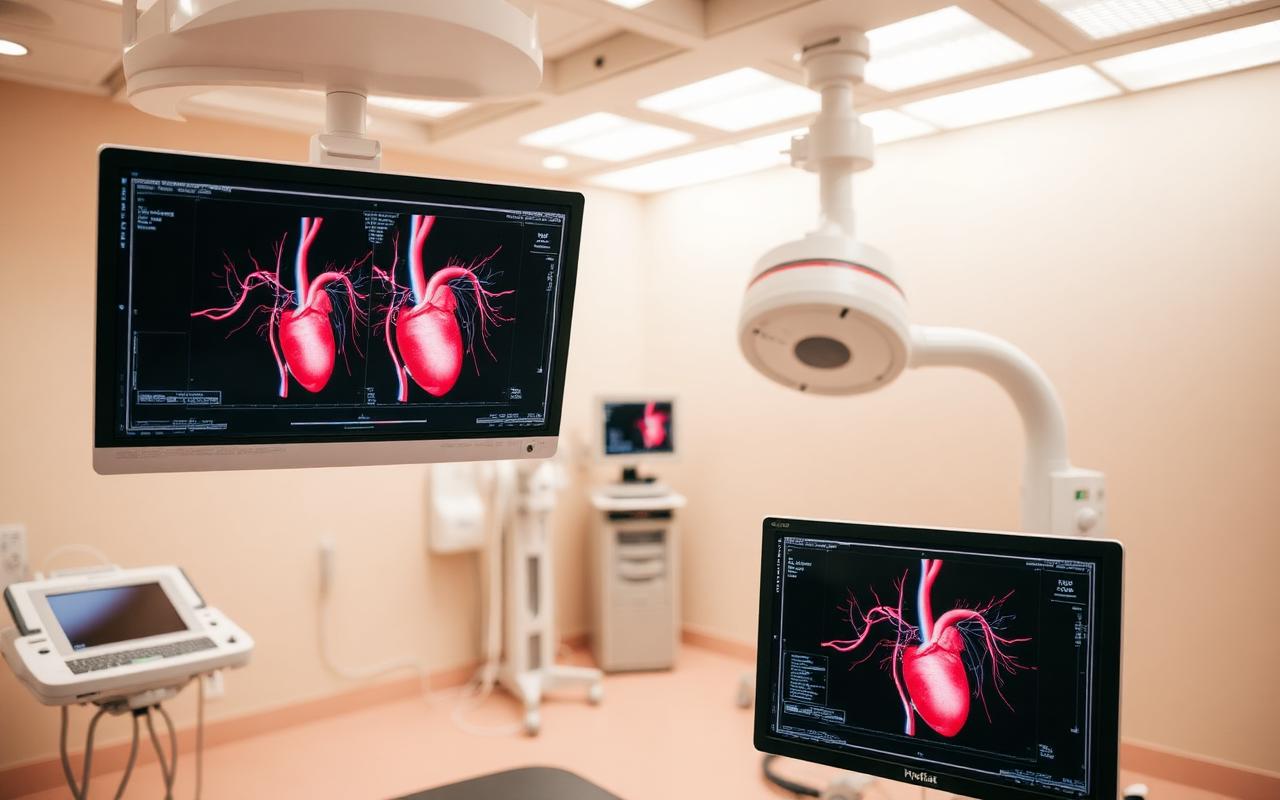
Coronary angiography, angioplasty and stenting in our state-of-the-art catheterization lab.
Learn more
Arrhythmia diagnosis, ablation procedures and pacemaker programming under one roof.
Learn more